
How Can Gottman Method Couples Therapy Strengthen Your Relationship?
Every couple faces moments where communication breaks down, and the sense of connection starts to fade. Maybe conversations keep turning into arguments that go nowhere, or maybe the emotional intimacy that once felt effortless now feels out of reach. When the weight of unresolved conflict builds over time, it can leave both partners feeling misunderstood, frustrated, and uncertain about the future. The good news is that these struggles are not a sign that a relationship is beyond repair. With the right support, couples can learn to navigate complex emotions, replace negative conflict patterns, and build a stronger, more lasting partnership.
Balanced Mind of New York offers compassionate, professional couples therapy with psychotherapists who specialize in helping partners communicate more openly and resolve conflict in healthy ways. Their approach goes beyond simply managing disagreements. It is about fostering a deeper emotional connection and helping couples develop the tools they need to grow together over the long term. If you and your partner are ready to invest in your relationship health, reach out to Balanced Mind of New York today to schedule a free consultation.
What Is the Gottman Method?
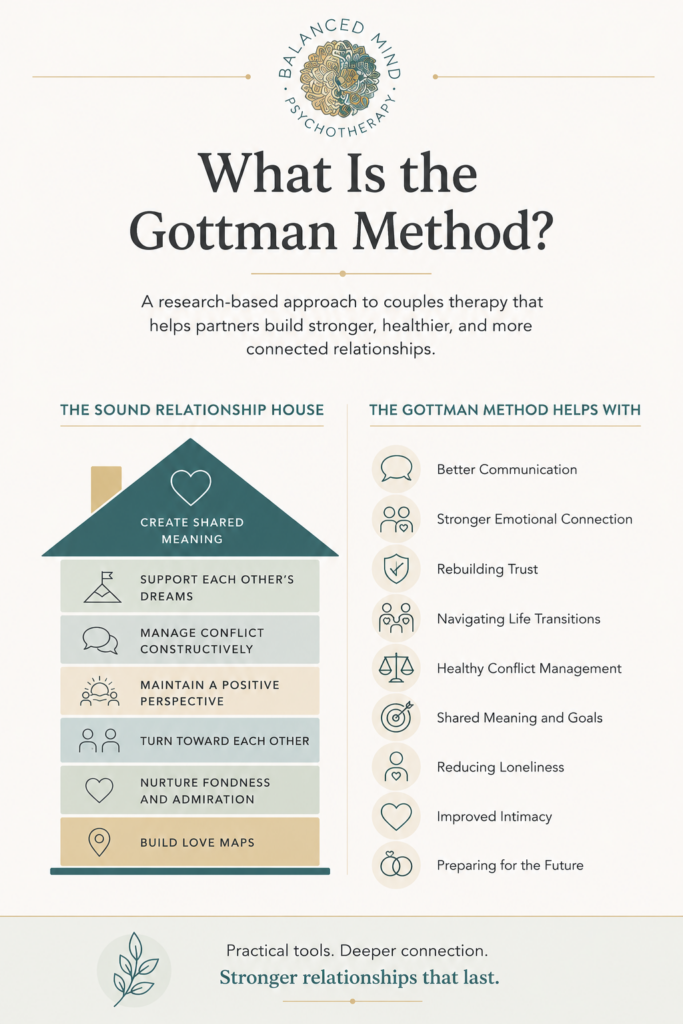
The Gottman Method is a research-based approach to couples therapy developed by Drs. John Gottman and Julie Gottman. Over four decades of research at the Gottman Institute, John Gottman studied thousands of couples to identify the specific behaviors and patterns that predict relationship success or breakdown. The result is a structured, evidence-based framework built on what is known as the Sound Relationship House Theory, which describes the key elements that support healthy, lasting relationships.
The Sound Relationship House includes layers such as building love maps, nurturing fondness and admiration, turning toward each other in small everyday moments, maintaining a positive perspective, working together to manage conflict, create shared meaning, and support each other’s goals and dreams.
The Gottman Method focuses on helping couples identify and understand their relationship dynamics so they can replace negative conflict patterns with more constructive ones. It is used by mental health professionals to work with couples across a wide range of backgrounds, sexual orientations, and relationship structures.
Issues commonly addressed with Gottman Method couples therapy include:
Frequent Arguments and Communication Breakdowns
When partners struggle to express themselves without conflict escalating, conversations can become a source of dread rather than connection. Gottman Method therapy helps couples develop communication skills that reduce tension and build mutual understanding. Partners learn how to express concerns in ways that invite productive dialogue rather than defensiveness, while also becoming better listeners. Over time, these skills can transform difficult conversations from recurring battlegrounds into opportunities for greater understanding and collaboration.
Emotional Distance and Loss of Connection
Over time, couples can drift apart without realizing it. Therapy helps partners reconnect by rebuilding the small, everyday moments of closeness that form the foundation of a healthy relationship. Many couples describe feeling more like roommates than romantic partners, even though they still care deeply about each other. Through intentional exercises and guided conversations, partners can strengthen their friendship, deepen emotional intimacy, and rediscover a sense of connection.
Trust Issues and Recovering From Infidelity
Rebuilding trust after a betrayal is one of the most difficult challenges a couple can face. The Gottman Method provides a structured path toward honest conversation, accountability, and gradual repair. Therapy helps partners process painful emotions while creating a framework for rebuilding safety and transparency. Whether trust has been damaged by infidelity, secrecy, or repeated disappointments, couples can learn how to move forward with greater honesty and understanding.
Parenting Disagreements and Life Transition Stress
Major life changes such as having children, career shifts, or loss can create friction between partners. Therapy helps couples navigate these transitions as a united team rather than adversaries. Partners learn how to discuss differing priorities and expectations without becoming entrenched in conflict. By strengthening communication and collaboration, couples are often better equipped to manage stress while maintaining a strong relationship.
Difficulties Managing Conflict Without Escalation
Some couples find that even minor disagreements quickly spiral. Gottman Method therapy teaches practical conflict management skills that keep difficult conversations productive and respectful. Partners learn to recognize early signs of escalation and use tools to de-escalate before conflicts become damaging. This approach helps create a sense of emotional safety, even when discussing sensitive or highly charged topics.
Lack of Shared Meaning and Aligned Goals
When partners feel they are moving in different directions, the relationship can feel unstable. Therapy helps couples explore their values and build a stronger sense of shared meaning and purpose. This may involve discussing long-term goals, family traditions, spiritual beliefs, or the kind of life they want to create together. Developing a shared vision can strengthen the relationship and help partners feel more connected as they move forward.
Feelings of Loneliness Within the Relationship
Being in a relationship does not automatically protect against loneliness. Therapy addresses the emotional gaps that leave one or both partners feeling unseen or unsupported. Couples often discover that loneliness develops not from a lack of love, but from repeated missed opportunities for connection. Gottman Method interventions help partners become more responsive to each other’s emotional needs and bids for attention, strengthening their sense of closeness and belonging.
Concerns About Sexual Intimacy and Physical Connection
Physical and emotional intimacy are deeply intertwined. Therapy creates a safe space to discuss these concerns openly and work toward a more fulfilling connection. Couples can explore barriers to intimacy, improve communication about their needs, and better understand each other’s experiences. Strengthening emotional trust often creates a foundation for improving physical connection as well.
Pre-Marital Preparation and Relationship Skill Building
Couples who are not yet in crisis can also benefit from the Gottman Method. Pre-marital work helps partners build a strong foundation and develop tools for navigating future challenges together. Topics often include communication styles, conflict management, finances, family expectations, and long-term goals. Investing in these conversations before marriage can help couples enter the next stage of their relationship with greater confidence and understanding.
What Can I Expect From Gottman Method Couples Therapy?
Starting couples counseling can feel like a big step, but knowing what to expect can make it easier. Gottman Method therapy begins with an assessment phase. A therapist will meet with both partners together and then individually to better understand the relationship history, current challenges, and each person’s perspective. This helps the therapist identify specific patterns and areas for growth.
From there, sessions are tailored to the couple’s needs. The Gottman Method focuses on building skills that create positive interactions and repair emotional connection over time. Rather than simply refereeing disagreements, the goal is to help couples disarm conflicting verbal communication and develop new ways of relating to one another.
Common exercises and techniques used during Gottman Method sessions include:
Love Maps
Structured conversations that help partners deepen their knowledge of each other’s inner lives, including dreams, worries, and daily experiences. Building a detailed Love Map helps each person feel truly known by their partner.
Many couples assume they know everything about one another, only to discover that important aspects of their partner’s inner world have changed over time. Work stress, evolving goals, family dynamics, and personal challenges can all shape how a person thinks and feels. Love Map exercises encourage ongoing curiosity and help partners stay connected as individuals and as a couple. By continually learning about one another, couples often experience greater emotional intimacy, empathy, and friendship, which are essential components of long-term relationship satisfaction.
Four Horsemen Interventions
Couples learn to recognize and reduce the four destructive communication patterns that John Gottman identified as predictors of relationship breakdown: criticism, contempt, defensiveness, and stonewalling. Replacing these patterns leads to more productive and respectful interactions.
Many couples engage in these behaviors without realizing how damaging they can be over time. Even seemingly small moments of criticism or defensiveness can gradually erode trust and emotional safety within the relationship. During therapy, couples learn specific antidotes to each of the Four Horsemen, helping them communicate concerns more effectively while remaining connected. As these healthier patterns become habitual, partners often find that conflicts become less frequent, less intense, and easier to resolve.
Gottman-Rapoport Blueprint
A guided technique that helps couples discuss deeply held but differing perspectives in a way that builds understanding rather than escalating conflict. Each partner takes turns speaking and listening without interruption or rebuttal.
This exercise is particularly useful when couples feel stuck in repetitive arguments where neither person feels heard. Rather than focusing on persuading or proving a point, the emphasis shifts toward understanding the meaning behind each partner’s perspective. The structured format encourages active listening, empathy, and emotional validation. As partners gain a clearer understanding of one another’s experiences, they are often better able to collaborate on solutions and navigate disagreements with greater respect.
Dreams Within Conflict
An exercise that explores the deeper personal meaning behind recurring disagreements. Many conflicts are not really about the surface issue but about unmet needs or personal values, and this technique helps uncover what is truly at stake for each partner.
For example, an argument about finances may actually reflect concerns about security, independence, or family values. A disagreement about time spent together may reveal deeper needs for connection, appreciation, or belonging. By identifying the underlying dreams, fears, and aspirations attached to a conflict, couples can move beyond blame and toward greater compassion. This process often transforms seemingly unsolvable arguments into opportunities for deeper understanding and emotional connection.
Softened Start-Up
Partners learn to raise concerns gently and constructively so that difficult conversations do not begin on the defensive. How a conversation starts largely determines how it ends, and this skill makes a significant difference in relationship dynamics.
Many conflicts escalate not because of the issue being discussed but because of the way the conversation begins. Harsh criticism, accusations, or frustration can immediately trigger defensiveness and shut down productive dialogue. A softened start-up teaches partners how to express concerns using respectful language, personal feelings, and specific requests. This approach creates a safer environment for discussion and significantly increases the likelihood of a positive outcome.
Repair Attempts
Couples identify and practice small gestures, such as a touch, a shared laugh, or a simple acknowledgment, that can de-escalate tension in the middle of a conflict. Learning to recognize and accept repair attempts is one of the most practical skills the Gottman Method teaches.
Research conducted by the Gottmans found that successful couples are often distinguished not by the absence of conflict but by their ability to repair after conflict occurs. Repair attempts help interrupt negative interaction patterns before they become overwhelming. In therapy, couples learn how to make these gestures intentionally and how to recognize them when their partner reaches out. Strengthening this skill can help partners recover more quickly from disagreements and maintain a sense of connection even during difficult moments.
Rituals of Connection
Partners work together to create intentional routines that build emotional intimacy over time. These rituals, whether a morning check-in or a weekly date night, help sustain the bond between partners amid the busyness of daily life.
Healthy relationships are often built through small, consistent moments of connection rather than grand gestures. Rituals of connection create opportunities for partners to prioritize one another and reinforce their sense of partnership. These routines can be tailored to the unique needs and lifestyle of each couple, making them both meaningful and sustainable. Over time, these intentional moments strengthen emotional closeness, increase relationship satisfaction, and help couples stay connected through life’s inevitable stresses and transitions.
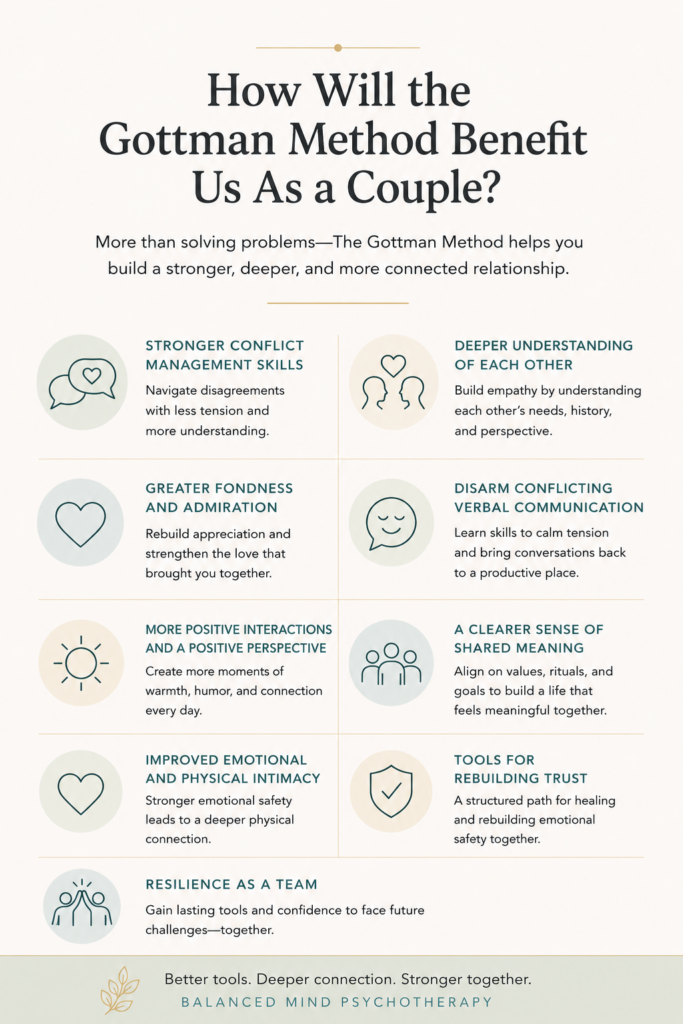
How Will the Gottman Method Benefit Us As a Couple?
The Gottman Method offers couples much more than a set of conflict management skills. It provides a shared framework for understanding each other and the relationship itself. As partners work through therapy, they often find that they are not just resolving specific problems but actually reshaping the way they relate to each other in everyday life.
Research from the Gottman Institute consistently shows that couples who engage in this type of therapy experience meaningful improvements in relationship satisfaction and emotional connection. The sound relationship house theory gives couples a common language for talking about what their relationship needs, which makes it easier to stay connected even during stressful periods.
Skills and benefits that Gottman Method therapy helps couples develop include:
Stronger Conflict Management Skills
Partners learn to engage with disagreements in ways that reduce the cycle of recurring arguments. Rather than avoiding conflict or letting it spiral, couples gain confidence in navigating difficult conversations constructively.
Deeper Understanding of Each Other
Therapy builds awareness of each partner’s emotional needs, personal history, and relationship dynamics. This understanding creates a foundation for greater empathy and more thoughtful responses during moments of stress.
Greater Fondness and Admiration
The Gottman Method actively works to rebuild and reinforce the appreciation partners have for one another. Nurturing fondness and admiration helps counterbalance frustration and keeps the relationship grounded in genuine affection.
The Ability to Disarm Conflicting Verbal Communication
Couples learn to recognize when a conversation is escalating and use specific skills to bring it back to a productive place. This reduces the emotional damage that can accumulate from repeated heated exchanges.
More Positive Interactions and a Positive Perspective
Research from the Gottman Institute shows that healthy relationships maintain a high ratio of positive to negative interactions. Therapy helps couples build more moments of warmth, humor, and goodwill that strengthen the relationship over time.
A Clearer Sense of Shared Meaning
Partners explore their values, rituals, and goals together, building a deeper sense of shared meaning that makes the relationship feel purposeful and connected. This layer of the sound relationship house is what helps couples feel like true partners in life.
Improved Emotional and Physical Intimacy
As communication improves and emotional safety grows, many couples find that their physical connection also deepens. Emotional intimacy and physical closeness are closely linked, and progress in one area often supports the other.
Tools for Rebuilding Trust
Couples who have experienced a breach of trust learn a structured approach to repairing the relationship. This includes honest conversation, consistent follow-through, and the gradual rebuilding of emotional safety.
Resilience as a Team
Beyond resolving current issues, Gottman Method therapy equips couples to handle future challenges together. The skills and perspectives gained in therapy become lasting resources that support the relationship for years to come.
Why Should I Choose Balanced Mind of New York?
Choosing the right therapist for couples counseling is an important decision, and Balanced Mind of New York is committed to making that process feel welcoming and straightforward. Their team of experienced psychotherapists brings both clinical expertise and genuine warmth to every session. They understand that reaching out for help takes courage, and they approach every couple with care, without judgment.
The therapists at Balanced Mind of New York are trained in the Gottman Method and are skilled at helping couples apply its principles to real-life situations. Whether you are navigating a specific crisis or simply want to build a stronger foundation, they are equipped to meet you where you are. Their practice is inclusive and affirming, welcoming couples of all backgrounds and sexual orientations.
Balanced Mind of New York also offers a collaborative, thoughtful approach to treatment. Therapists work closely with each couple to ensure that sessions are relevant, practical, and focused on meaningful progress. The goal is not just to help couples feel better in the short term but to support the kind of growth that leads to healthy relationships for years to come.
If you are ready to take the next step toward a stronger, more connected partnership, Balanced Mind of New York is here to help. Contact them today to schedule your first free consultation and find out how the Gottman Method can work for you and your partner.